ServicesWhole-Home Filtration
Whole-Home Filtration in Briarcliff
We install a filtration system where your water line enters the house, so the kitchen sink, every shower and the washing machine all get the same filtered water. We test your water first and size the system to your home, and installation is free.
What a whole-home filter does for your home
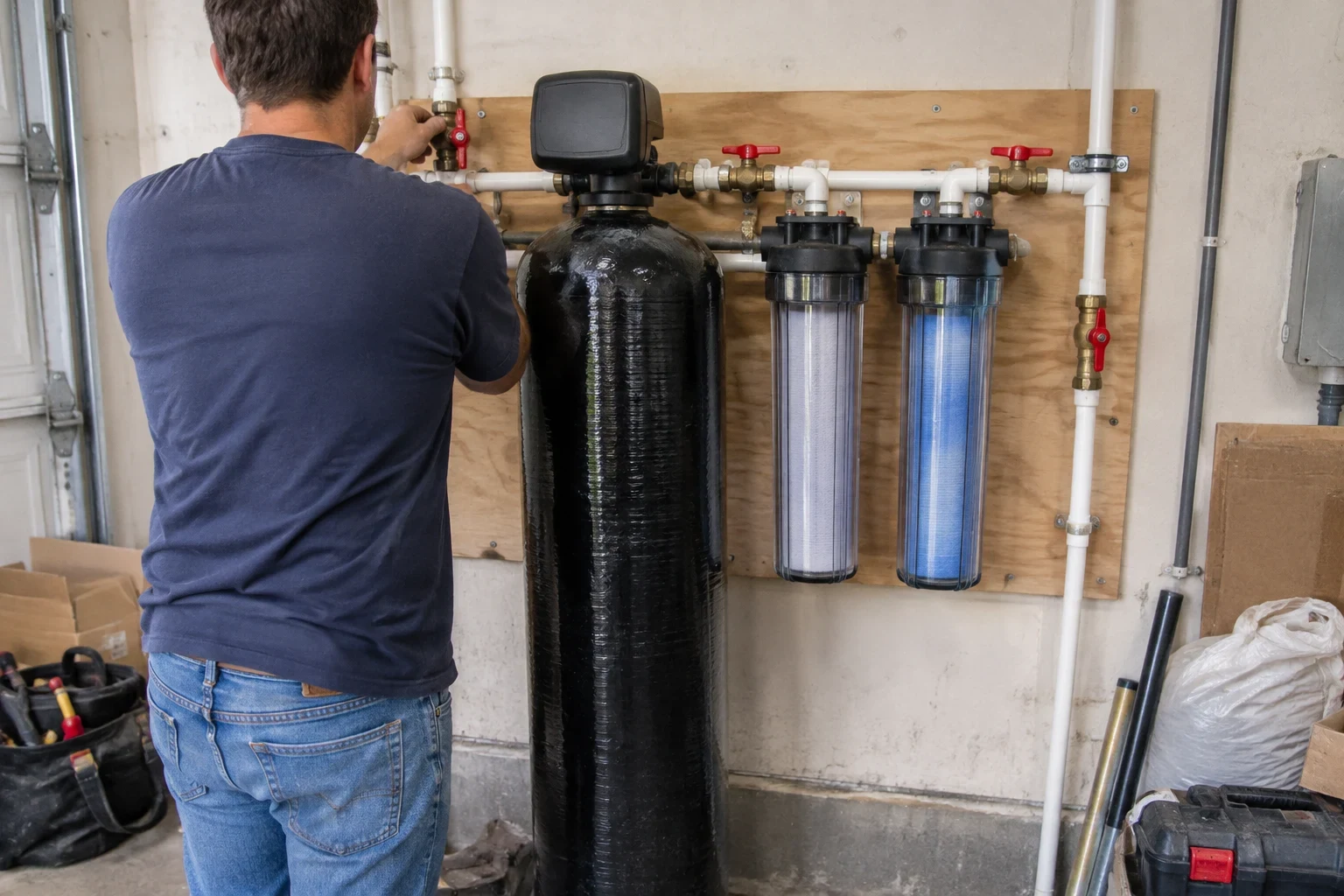
A whole-home system, sometimes called a point-of-entry filter, is installed on your main water line before the line splits off to the kitchen, bathrooms and laundry. A typical setup has two parts: a sediment prefilter up front and a large tank of carbon media behind it. The first part holds back sand and flecks of rust. The carbon then strips out chlorine, so the water loses that bleach-like taste and odor, and it also reduces many of the compounds that leave tap water tasting flat.
This is the right call when the complaint shows up in more than one room: a chemical smell in the shower, ice cubes that taste off, residue gathering in faucet aerators. If drinking water is your only worry, an under-sink unit from our Reverse Osmosis Systems page may be the smaller and better choice. If scale from hard water is the real complaint, a softener or salt-free conditioner handles it, and carbon will not.
We would rather sell you the right piece of equipment than the biggest one. So every recommendation begins with a test of your water, and we go over the results in plain language before equipment ever comes up.
What comes with a whole-home install
- 01
A free water test first
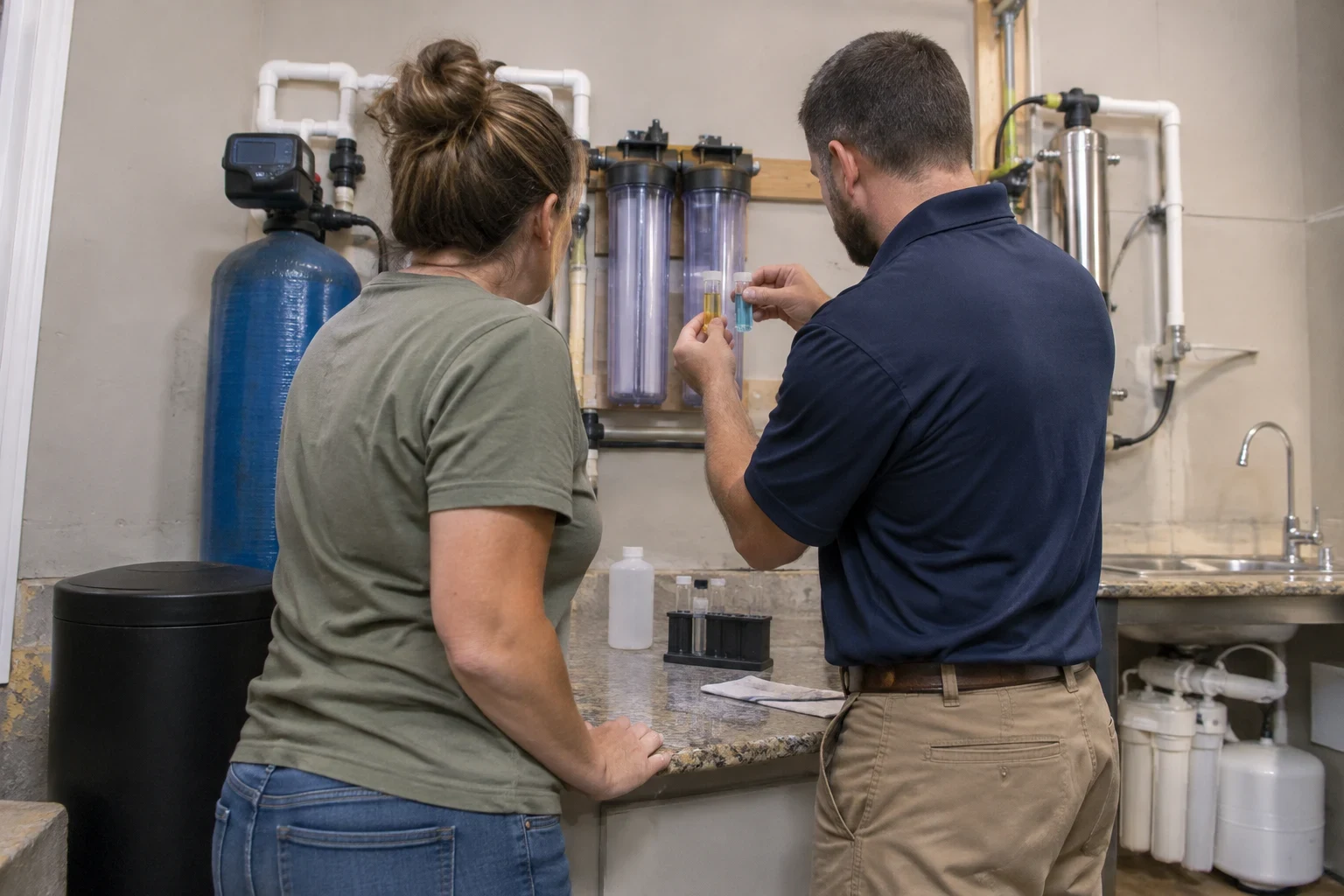
We measure chlorine, hardness, iron, sediment and pH right at your tap. Those numbers drive the recommendation, so you never pay for media aimed at a problem your water does not have.
- 02
Sediment prefilter
This first stage traps sand, grit and bits of pipe scale so they never reach the carbon. That keeps the main tank working longer and stops debris from building up in aerators and appliance screens.
- 03
Carbon tank sized to your flow
Tank size follows the number of bathrooms and people in your home. When a tank is too small, water moves through the media too fast, so filtering suffers and pressure drops when several taps run at once.
- 04
Bypass valve and shutoffs
Each system includes a bypass, so your water stays on while a cartridge is changed or the unit is serviced. We tag the valves clearly so anyone in the family can find them.
- 05
Free installation and cleanup
Installation is free. We protect the floor with drop cloths, flush the system before leaving and take the packaging and old fittings with us.
- 06
A walkthrough before we go
We show you how to swap the prefilter cartridge, what the pressure gauge is telling you and roughly when the carbon media will need replacing.
Questions about Whole-Home Filtration?
Call(512) 883-1130Signs your home could use whole-home filtration
Your shower smells like a pool
Chlorine evaporates fastest in hot water, so the bathroom is often where people notice it first. A carbon system removes it before the water reaches the shower head.
Ice and coffee taste off
If the refrigerator filter cannot keep up, or you have stopped drinking from the tap altogether, taste is a clear signal.
Grit in aerators and screens
Sand or dark specks collecting in faucet aerators, toilet tanks or the washer inlet screen point to sediment a prefilter would catch.
You filter one tap and wish you had all of them
A pitcher or a faucet-mount filter works for drinking. It does nothing for showers, laundry or the dishwasher.
Light stains on fixtures
Faint orange or brown marks can come from iron or old piping. A test tells us whether filtration handles it or whether you need our iron and sulfur removal service instead.
How the job goes, start to finish
- 1
A phone call
Tell us what you have been noticing in your water and how many people share the household. Then we pick a day that suits you for the test visit.
- 2
Testing at your tap
We test at your kitchen sink and go over each number with you as it comes in. If your water turns out to be in good shape, we tell you that plainly.
- 3
A clear quote
Your written quote spells out the system, the media and every part, plus what upkeep will involve over the next few years.
- 4
Install day
We close the main, cut into the line near its entry point, usually in the garage or along an outside wall, and mount the tanks and bypass. We are typically done well before evening, and the taps go dry only for the stretch when we tie the new system into your line.
- 5
Flush and check
We run water through the new media until it comes out clear, inspect every joint for drips, check pressure at a few faucets and tidy the work area before leaving.
What affects the price
Installation is free, so your quote mostly comes down to the equipment and media your home needs. Two houses on the same street can need different systems, and the test is what tells us which one fits yours. We go through each line of the quote with you on the phone or at your kitchen table.
- Home size and water use
- More bathrooms and more people mean higher peak flow. That calls for a larger tank and more media.
- What the test finds
- Chlorine alone needs a simpler setup than water that also carries sediment or iron. Extra stages add to the cost.
- Where your main line runs
- An easy-to-reach line in the garage is straightforward. A line under a slab or behind finished walls takes more fittings and more time.
- Media type and upkeep
- Standard carbon and catalytic carbon cost different amounts up front and need replacing on different schedules. We show you both before you decide.
Whole-home filtration questions
Will a whole-home filter lower my water pressure?
If the system is sized correctly, you should not notice a difference at the tap. When pressure does sag, the cause is usually a tank too small for the household or a prefilter cartridge that is clogged and overdue. We size the tank around your busiest time of day and show you what a cartridge looks like when it is ready to be swapped.
Does this soften my water?
No. Carbon pulls out chlorine, odors and many dissolved chemicals, but calcium and magnesium pass straight through. If your test shows hardness leaving scale on fixtures, we will talk through water softener installation or a salt-free conditioner, and either one can be plumbed in next to the filter.
How often does the media need changing?
The sediment cartridge is the part you swap most, typically a few times a year, and more often in homes where the water brings in more grit. The carbon bed behind it holds up for years. How many depends on your household's water use and the chlorine level we measure, so we base our estimate on your own test results.
Do I still need a reverse osmosis system for drinking water?
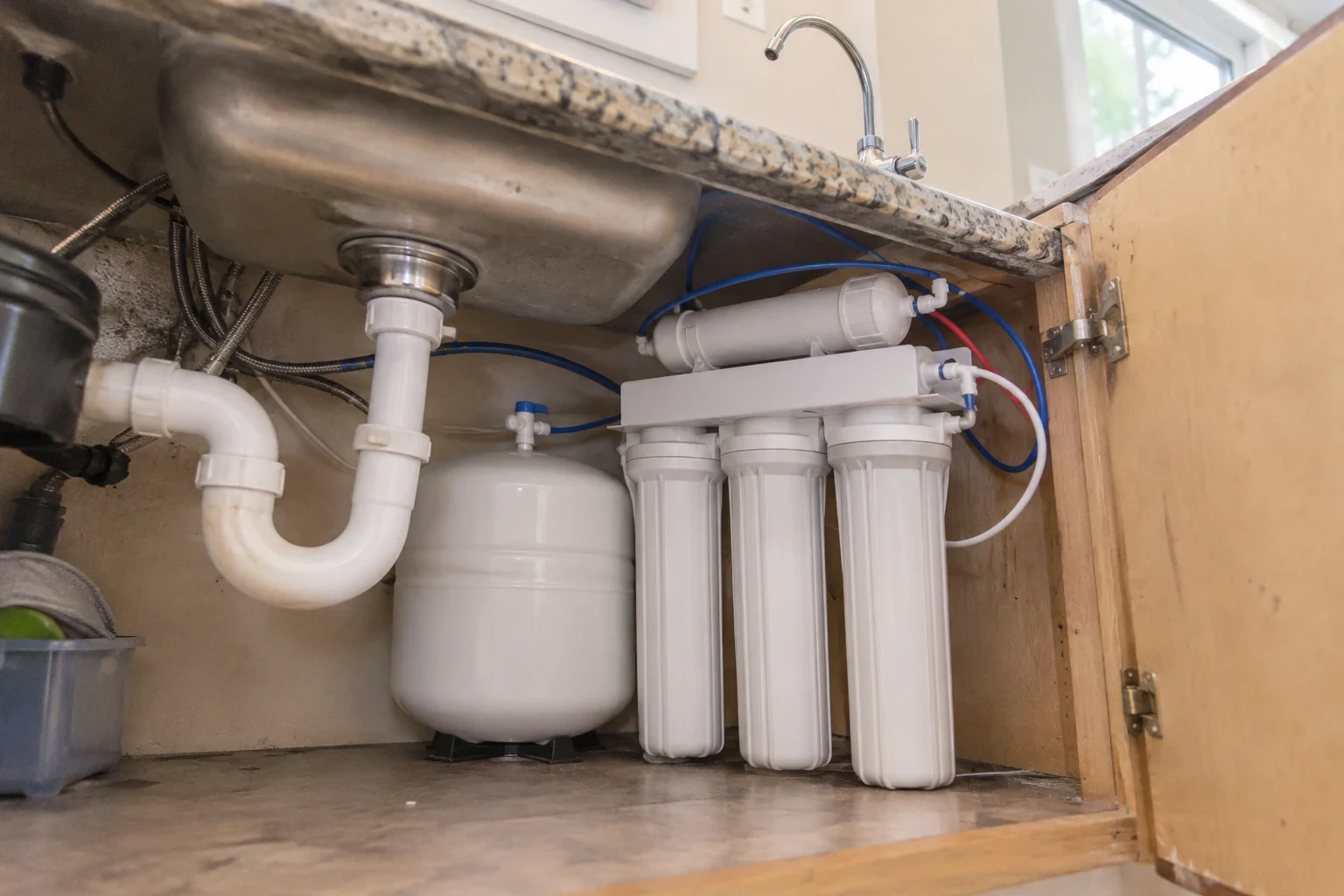
For taste alone, many families find whole-home carbon is enough. Reverse osmosis goes further at a single faucet, cutting dissolved solids and trace metals such as lead that can come from older plumbing. Some homes run both, with carbon on the main line and RO under the kitchen sink.
Where will the system go?
We put it close to the point where your main line comes into the house, often in the garage, a utility room or against an outside wall under a protective cover. The spot needs to be easy for you to reach at cartridge time, and we settle on it together before any work starts.
Find out what is in your water first
We test your water, explain what we find and recommend only what your home needs. Installation is free, and you will know exactly what you are paying for before we start.