ServicesSalt-Free Water Conditioners
Salt-Free Water Conditioners in Briarcliff
A salt-free conditioner keeps hard-water minerals from sticking to your pipes, water heater and faucets, without salt bags, brine tanks or a drain line. We test your water first, then tell you plainly whether this is the right fit for your home.
What a salt-free conditioner does, and what it doesn't
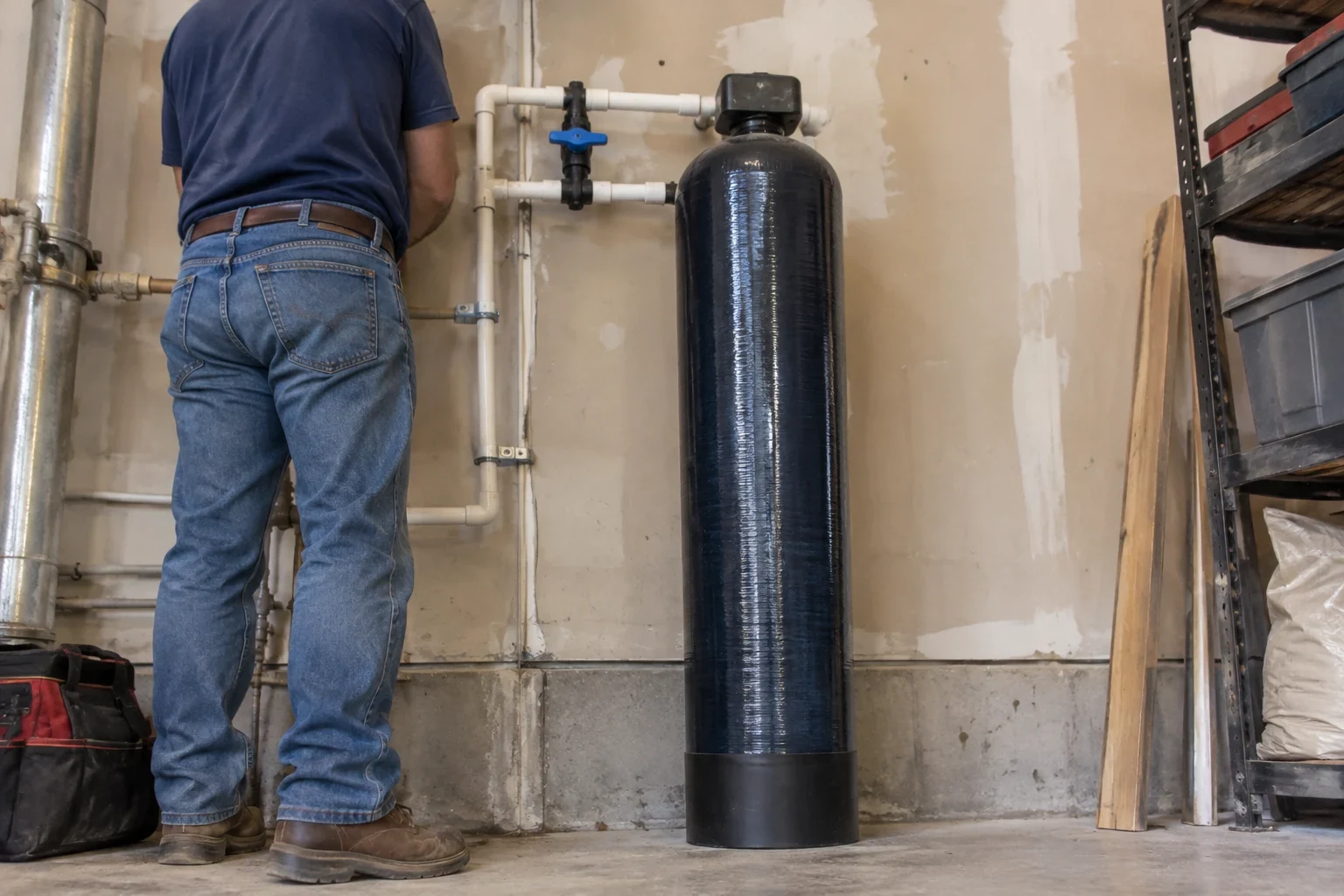
Most salt-free conditioners use a process called template-assisted crystallization. As water flows through the media, dissolved calcium and magnesium are turned into tiny crystals that stay suspended in the water instead of bonding to hot surfaces. The minerals are still there. They just stop building up as crusty scale inside your water heater, on your shower glass and around your faucets.
That is the honest tradeoff. A conditioner protects your plumbing and appliances, but it won't give you the slick, soft feel of salt-softened water, and you may still see some spotting where water dries. If you want that soft feel, a traditional system from our Water Softener Installation page may suit you better. We'll walk you through both and let you decide.
People pick salt-free conditioning because it asks very little of them. Nothing to refill, no electricity on most models, no regeneration cycle and no salty discharge down the drain. For a lot of families that's the whole point.
What's included when we put one in
- 01
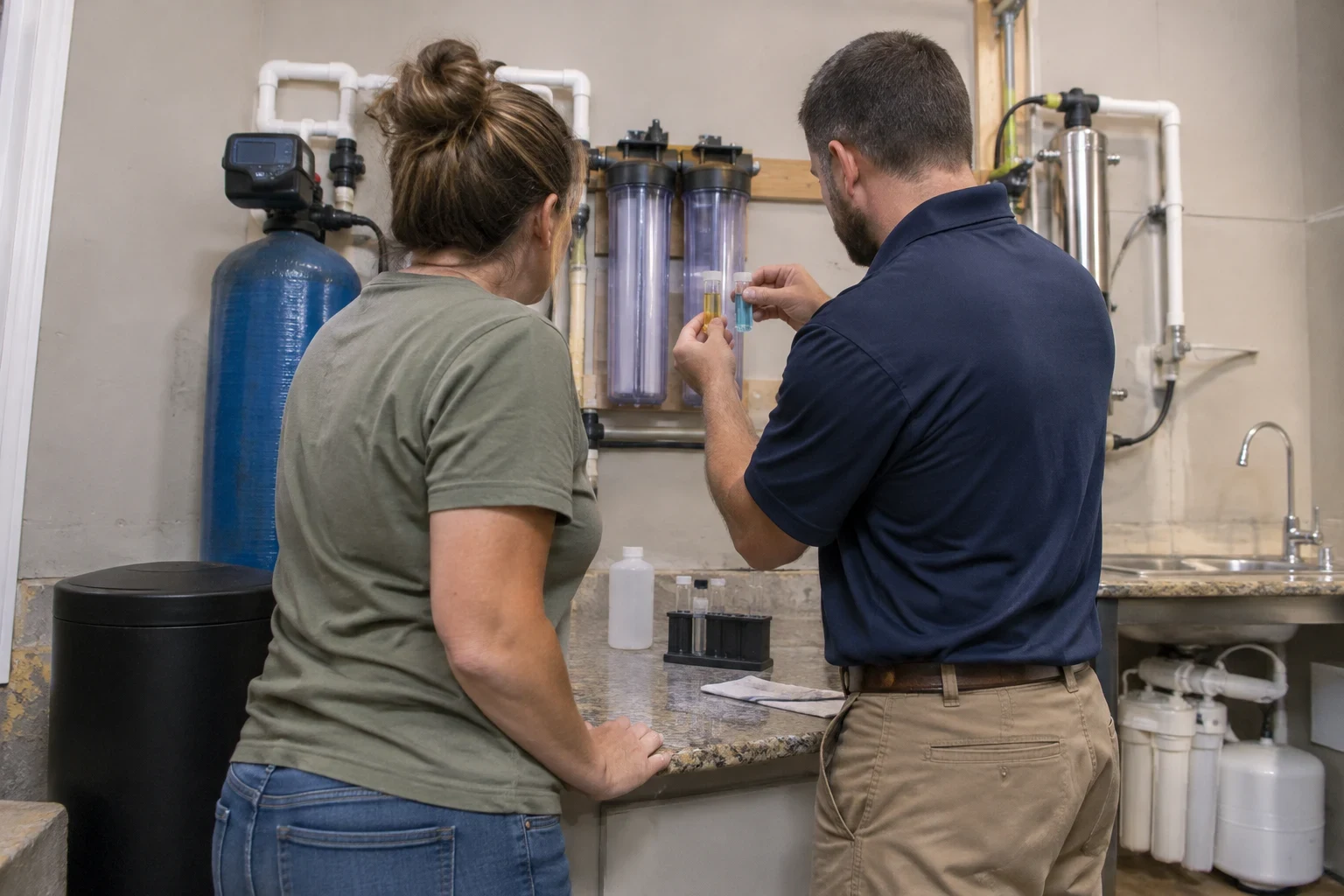
A water test before anything else
We check hardness, iron, chlorine and pH at your tap. Conditioner media works best inside certain limits, so the numbers decide whether we recommend one at all.
- 02
Sizing for your flow, not a stock model
We size the tank to your home's peak water use and the number of bathrooms. An undersized unit lets water rush past the media too fast to do its job.
- 03
A carbon pre-filter when it's needed
Chlorine and sediment can wear out conditioning media early. If your test shows them, we'll suggest pairing the conditioner with a sediment or carbon stage, the same kind used in our whole-home filtration work.
- 04
Installation at the main line
We install the system where water enters your home, with shutoff valves and a bypass so you can isolate it later without turning off the whole house.
- 05
Free installation
We offer free installation. Your quote covers the equipment and anything your setup needs, listed out so you can see what you're paying for.
Questions about Salt-Free Water Conditioners?
Call(512) 883-1130Signs a conditioner could help your home
Chalky rings on taps and shower spray holes
That pale, gritty coating that forms where water drips and dries is calcium scale. Over time it narrows the openings, so your shower loses pressure and fixtures start looking older than they are.
Popping or rumbling sounds from the water heater
Those noises usually mean mineral scale has settled on the bottom of the tank. The burner has to heat through that layer, so the same hot shower costs you more. Tankless heaters clog with scale even faster.
Hazy glasses and residue inside the dishwasher
Hard water leaves a dull film on glassware and a coating on the dishwasher's walls. Water that runs through limestone picks up these minerals, which is why so many homes around the Hill Country see it.
You don't want to haul salt
If lifting heavy bags and keeping a brine tank topped up sounds like a chore you'll skip, a salt-free unit takes that job off your list for good.
Water restrictions or a septic system
Some homeowners would rather have equipment that sends no brine or backwash water down the drain. A conditioner uses none.
How the job goes
- 1
Free test and a straight answer
We test your water and look at where your main line comes in. If your hardness or iron is outside what a conditioner handles well, we tell you, and we'll point you to an option that fits.
- 2
A quote you can read
You get a quote by phone that lists the conditioner, any pre-filter and the parts needed for your plumbing. No pressure to decide on the spot.
- 3
Install day
Most installs take a few hours. We lay down drop cloths, shut off water only while we cut in, and test for leaks before we turn everything back on.
- 4
Walkthrough and cleanup
We show you the bypass valve, explain when the media will eventually need replacing, and leave the space as clean as we found it.
What affects the cost
We don't price from a chart, because the right setup depends on your water and how your plumbing is laid out. Once we've run your free test and looked at your main line, you get an itemized quote. We go over each line with you before you decide anything.
- Size of the system
- Larger homes with more bathrooms need a bigger tank and more media to keep up with peak demand.
- Your water test results
- Higher hardness, or chlorine and sediment that call for a pre-filter, can add a stage to the setup.
- Access to the main line
- An open garage wall is quick work. A line buried behind finished drywall or in a tight closet takes more time and fittings.
- Pipe material and bypass parts
- Copper, PEX and CPVC each need different connectors, and older valves sometimes need replacing while we're there.
Salt-free conditioner questions
Will my water feel soft after it's installed?
No, and we'd rather you hear that now. The slippery feel comes from salt-based softening, which swaps the minerals out. A conditioner leaves them in but stops them from forming scale, so your water will feel much like it does today.
Does a salt-free conditioner remove chlorine or improve taste?
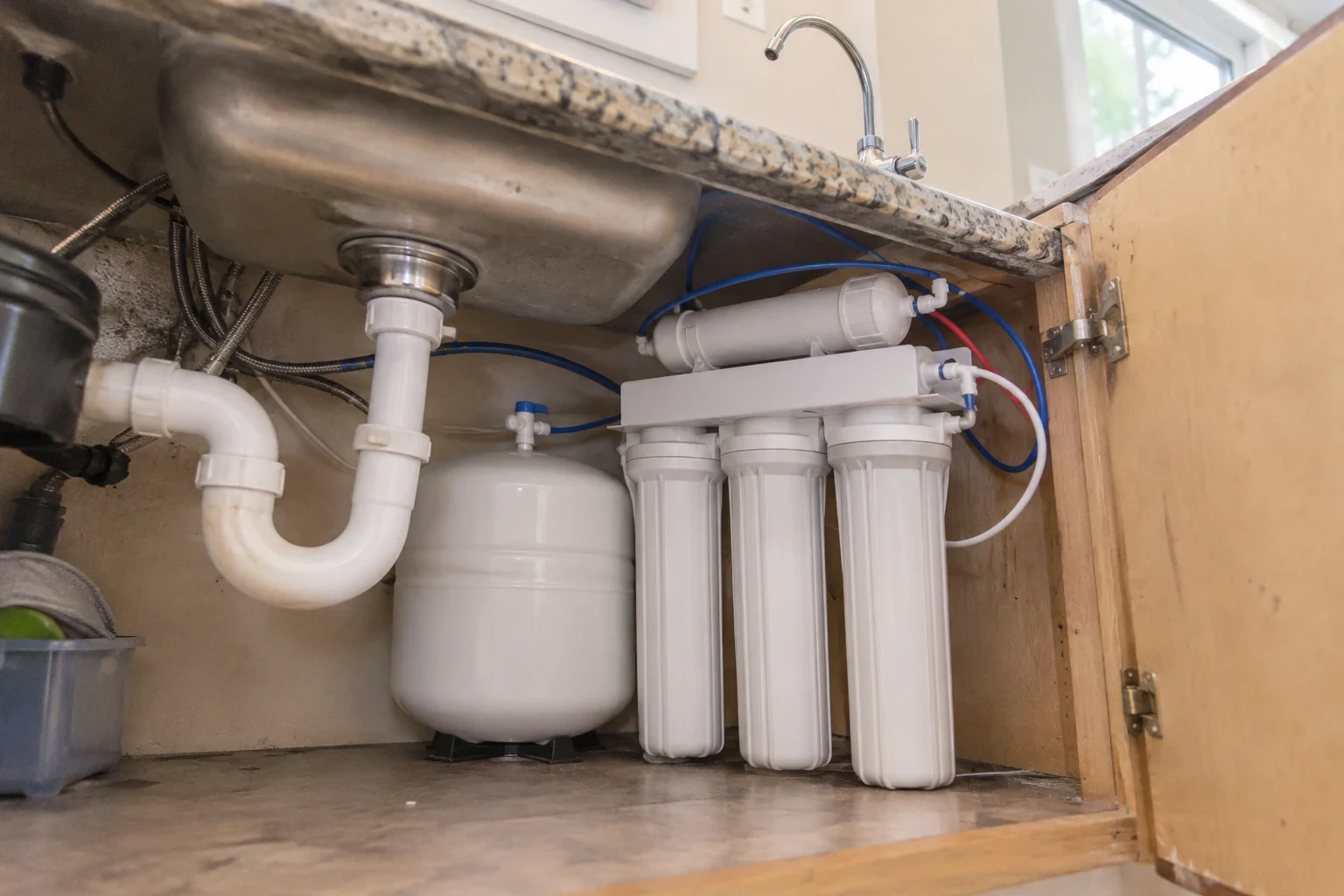
Not on its own. Its job is scale control. If taste or chlorine smell bothers you, we can pair it with a carbon stage, or add a reverse osmosis system at the kitchen sink for drinking water.
How often does the media need to be replaced?
It depends on your hardness, how much water your household uses and whether chlorine reaches the media. We'll give you a realistic estimate for your home after your water test, and there's no routine upkeep in between.
Is it better than a water softener?
It's different, not better. A softener removes hardness and gives softer-feeling water but needs salt and a drain. A conditioner needs almost nothing from you but doesn't change how water feels. Your test results and what matters most to you should decide it.
Do I really need a water test first?
We recommend it. High iron or manganese can coat conditioner media and shorten its life, and very hard water may be better served another way. The test is free, and it keeps you from buying the wrong equipment.
Find out if a conditioner fits your home
Tell us what you're seeing at your taps and we'll set up a free water test. Then you'll get an honest recommendation and a clear quote, whichever way it goes.