ServicesUV Water Purification
UV Water Purification in Briarcliff
Ultraviolet light keeps bacteria, viruses and cysts in your water from multiplying, with no chemicals added and no change in taste. Before recommending anything, we check what is in your water, match the unit to how much your household uses at once, and install it as carefully as we would in our own kitchen.
What UV Purification Does, and What It Does Not
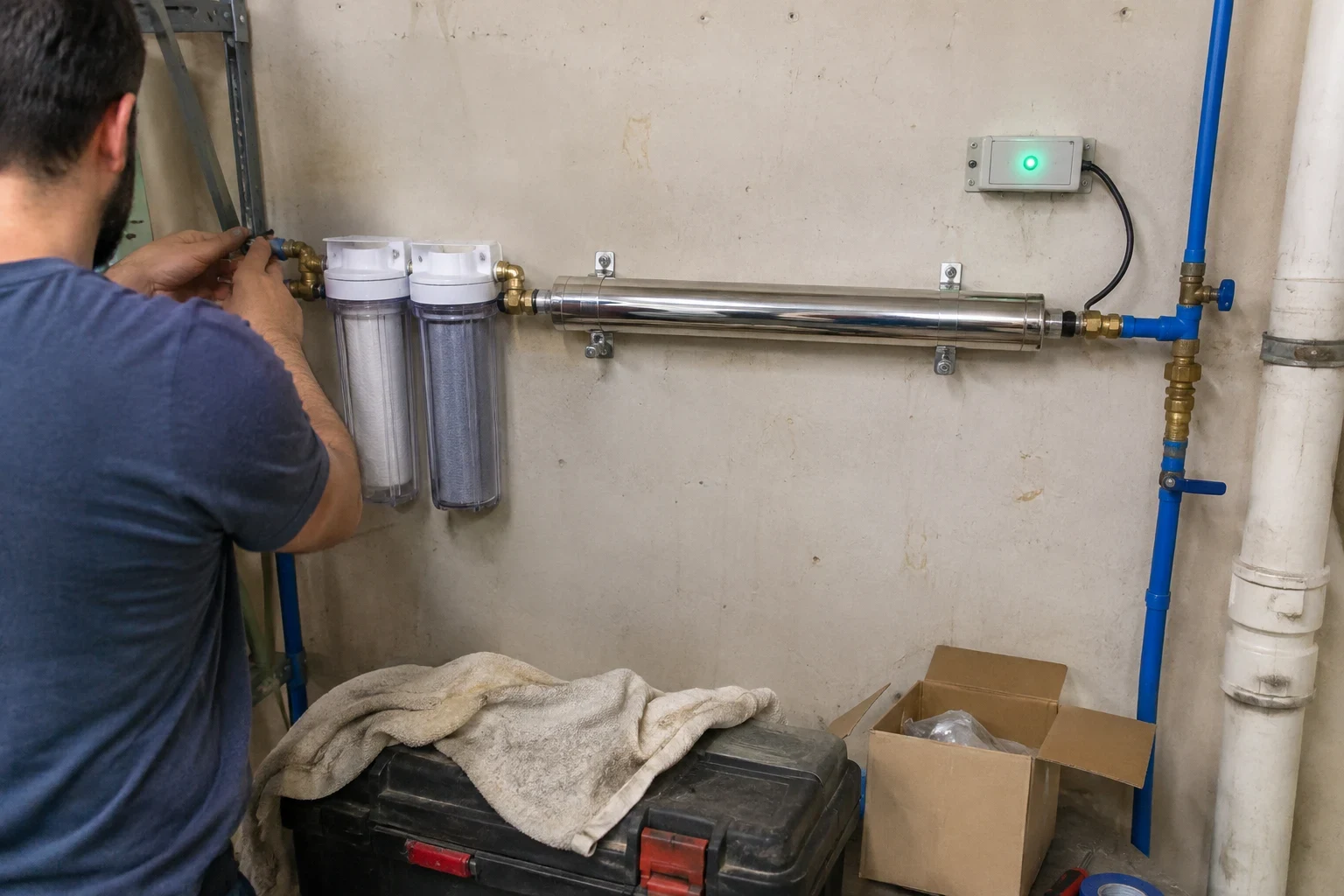
A UV unit is a metal cylinder plumbed into your water line, with a UV-C lamp protected by a see-through quartz tube running down the middle. As water moves past, the light damages the genetic material of bacteria, viruses and parasites such as Giardia and Cryptosporidium, so they cannot reproduce or make anyone sick. Your water gains nothing and loses nothing along the way.
That second point is important. UV does not remove chlorine, sediment, iron, hardness or lead. It acts only on living germs, and only when the water is clear enough for the light to reach them. So we treat it as one stage in a setup, usually the last one, placed after a sediment filter or a whole-home filtration system.
If you are not sure UV is the right fit, we will say so plainly. For many homes it is a useful extra layer of protection. For others, a different system solves the real problem better, and we would rather send you that way.
What Comes With Your UV System
A free water test first
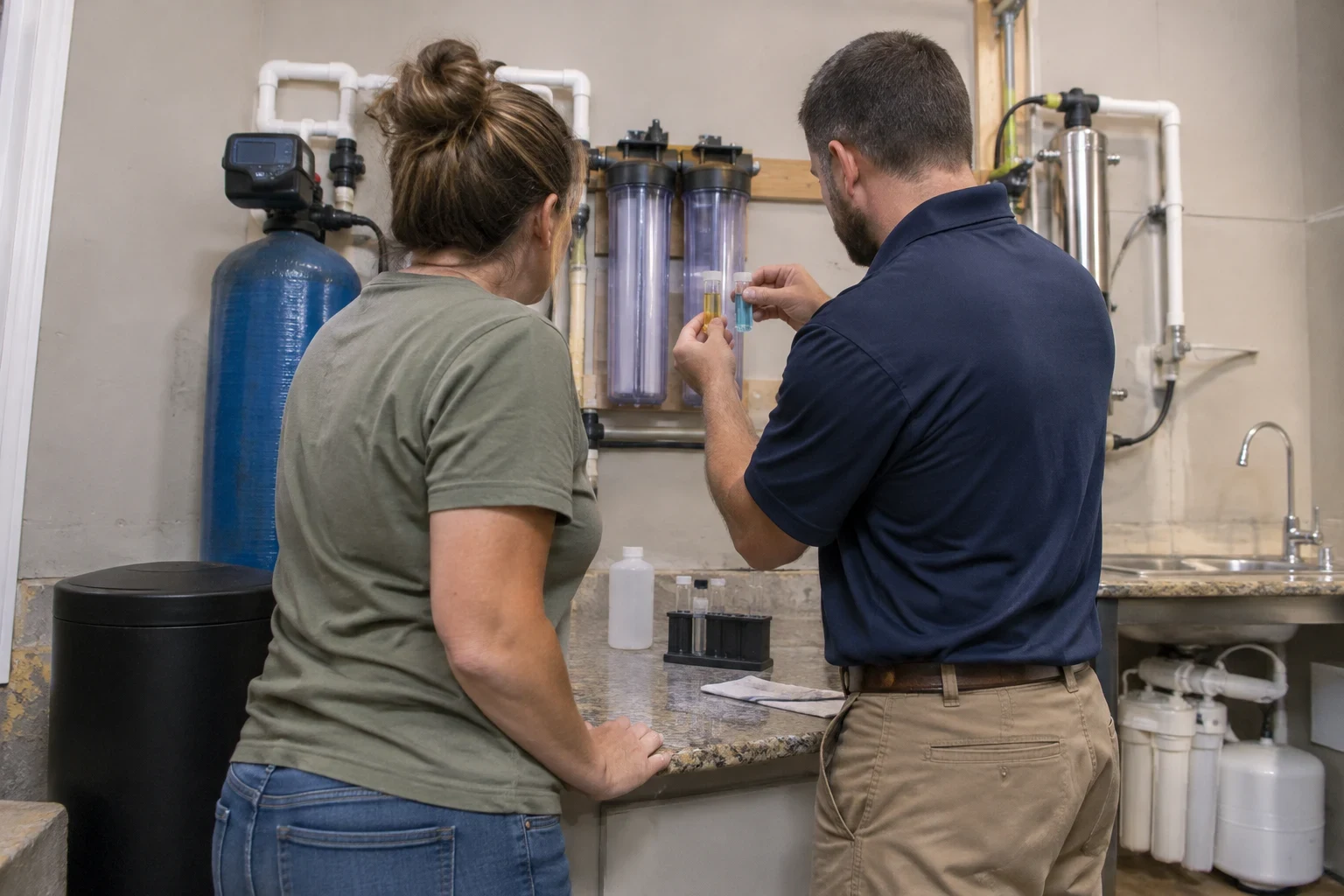
Clarity, iron, manganese and hardness decide whether UV can do its job. We measure all four, and if any would block the lamp's light, you hear about it before we install a thing.
System sized to your flow
Each UV chamber carries a gallons-per-minute rating. We match it to your household and fixtures so water gets enough exposure even with showers and the dishwasher going together.
Sediment pre-filter
We place a fine sediment cartridge before the UV chamber. Tiny particles can hide microorganisms from the light, so this filter is a needed part of the system, not an add-on.
Point-of-entry placement
The unit goes on the main line where it enters your home, after any other treatment, so water at every tap is treated. It plugs into a standard outlet, and we choose the location with you.
Plumbing sanitized at startup
After startup, we disinfect the pipes past the unit. Skipping that step would let bacteria already in your plumbing keep reaching your taps.
A walkthrough before we leave
You learn how to read the lamp indicator, swap the pre-filter and tell when a new lamp is due. Installation is free, and we clean up before leaving.
Signs UV Purification May Be Worth It
- Boil notices make you uneasy
- Central Texas storms and main breaks bring the occasional boil-water notice. A UV stage adds everyday protection, though you should still follow any official notice.
- Someone at home is more vulnerable
- Infants, grandparents and people whose immune defenses are lowered by illness or treatment can get sicker from germs in water than the rest of the family. Plenty of households add UV for that reason alone.
- A test showed coliform bacteria
- If a lab result came back positive for coliform, UV is a common, chemical-free answer once the source is understood and the water is clear.
- You want protection without more chlorine
- Some people would rather not add chlorine or other disinfectants at home. UV treats water with light, so taste and smell stay the same.
- Your filter setup has no disinfection step
- Carbon and sediment filters improve taste and clarity, but they are not built to kill bacteria or viruses. UV fills that gap at the end of the line.
How a UV Install Goes
- 1
Phone call and free water test
You tell us what is worrying you, and we set up a time to test your water. We look at the results together and talk through whether UV makes sense.
- 2
A clear quote
You get a written quote listing the UV unit, the pre-filter and any work needed to make it fit. No pressure, and no surprise items later.
- 3
Install day
We shut off the water briefly, cut in the pre-filter and UV chamber, and mount the controller near an outlet. Most homes are back to running water the same visit, and we protect floors and tidy up as we go.
- 4
Sanitize and check
We disinfect the downstream plumbing, flush the lines and confirm the lamp is running at full output before handing it over.
What Drives the Price of UV Treatment
A UV unit is a fairly simple piece of equipment, so prices mostly differ based on what your water and plumbing need around it. Your phone quote explains why each item is included. Installation costs nothing.
- Flow rate
- Homes with more bathrooms need a larger chamber and a more powerful lamp to treat water at full flow. A smaller unit costs less at first but can leave water short of full treatment.
- Pre-treatment needed
- If your water is clear and soft, a sediment cartridge may be all you need first. Iron, manganese or high hardness can call for iron removal, a softener or a salt-free conditioner before the UV to keep the sleeve clear.
- Monitoring features
- Entry-level units show lamp life. Higher-end ones add an intensity sensor, an alarm or a shutoff valve that stops water if the lamp fails. They cost more, but you always know how the system is doing.
- Space and power at the main line
- When the spot where your line comes in has no outlet or free wall space, some added plumbing or electrical work may be needed to get to a usable location.
Common Questions About UV
- Will UV change how my water tastes or smells?
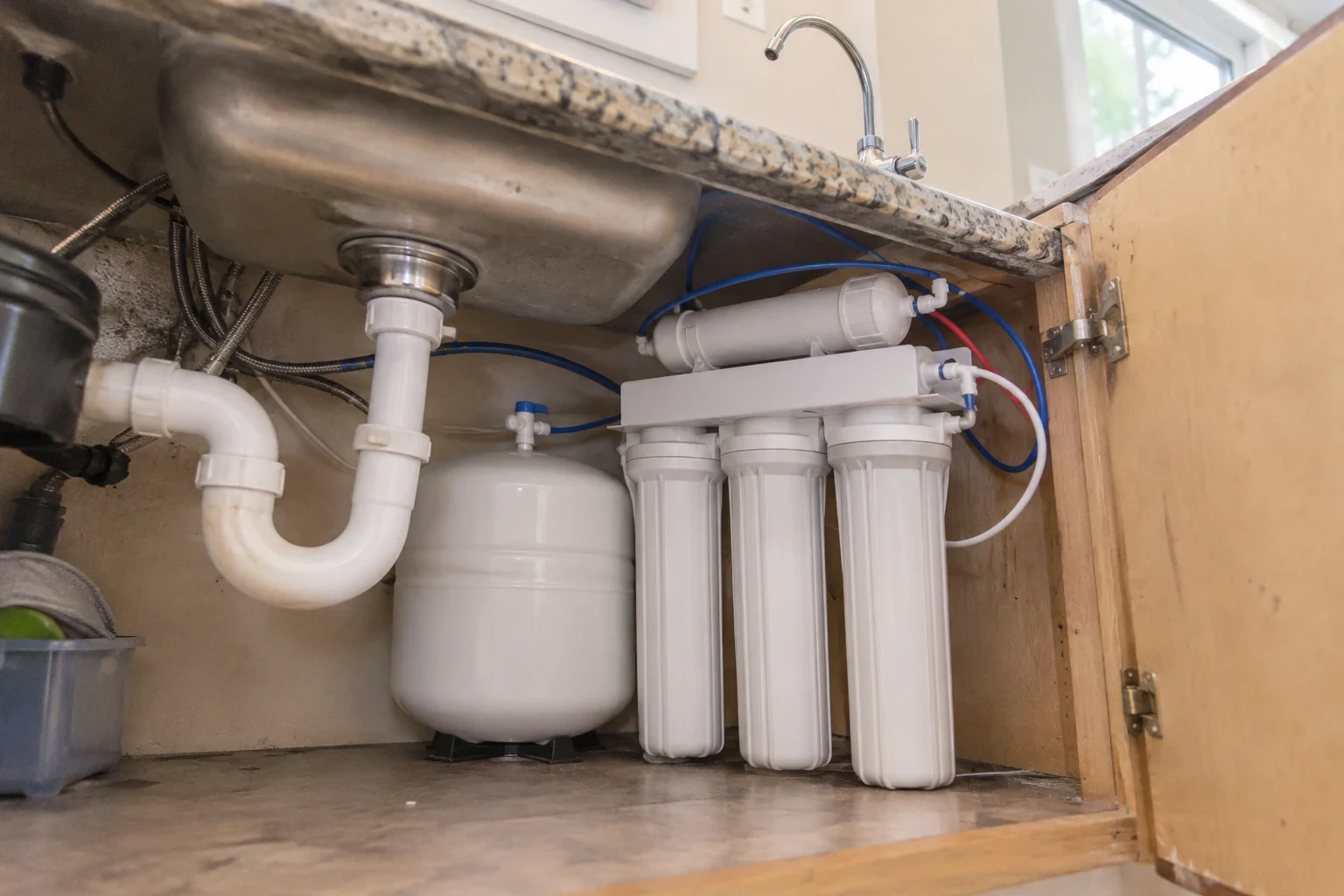
- You shouldn't notice any change at the faucet. The light adds nothing and removes nothing; it only stops germs from multiplying. If chlorine or taste is your concern, UV can be paired with whole-home filtration or a reverse osmosis system.
- When does the UV lamp need to be changed?
- Budget for a fresh lamp about once a year. An older bulb can keep glowing while its UV strength drops, so it may look fine but treat water poorly. Clean the quartz sleeve during that same visit, and change the pre-filter on the schedule we give you for your water.
- What if the power goes out?
- With no power the lamp shuts off, and water passing through in that time isn't treated. Many units restart on their own once power is back. After an extended outage, let your faucets run a few minutes, and know that some units can block flow any time the lamp is off.
- Can UV take the place of my other filters?
- No. UV only targets bacteria, viruses and cysts, and the water has to be clear for the light to reach them. It belongs at the end of the line, after sediment or carbon filtration.
- Does UV work with hard water?
- Hard water can leave a mineral film on the quartz sleeve that blocks the light. The free water test measures your hardness, and if it's high we'll recommend a water softener installation or a salt-free conditioner before the UV unit.
Find Out if UV Fits Your Home
Start with a free water test so we both know what is in your water. Then we can give you a straight quote and install it free if you decide to go ahead.