ServicesWater Softener Installation
Water Softener Installation in Briarcliff
Hard water leaves crust on faucets, spots on glasses and scale inside your water heater. We test your water first, recommend a softener only if the numbers support it, and size it to the way your family actually uses water.
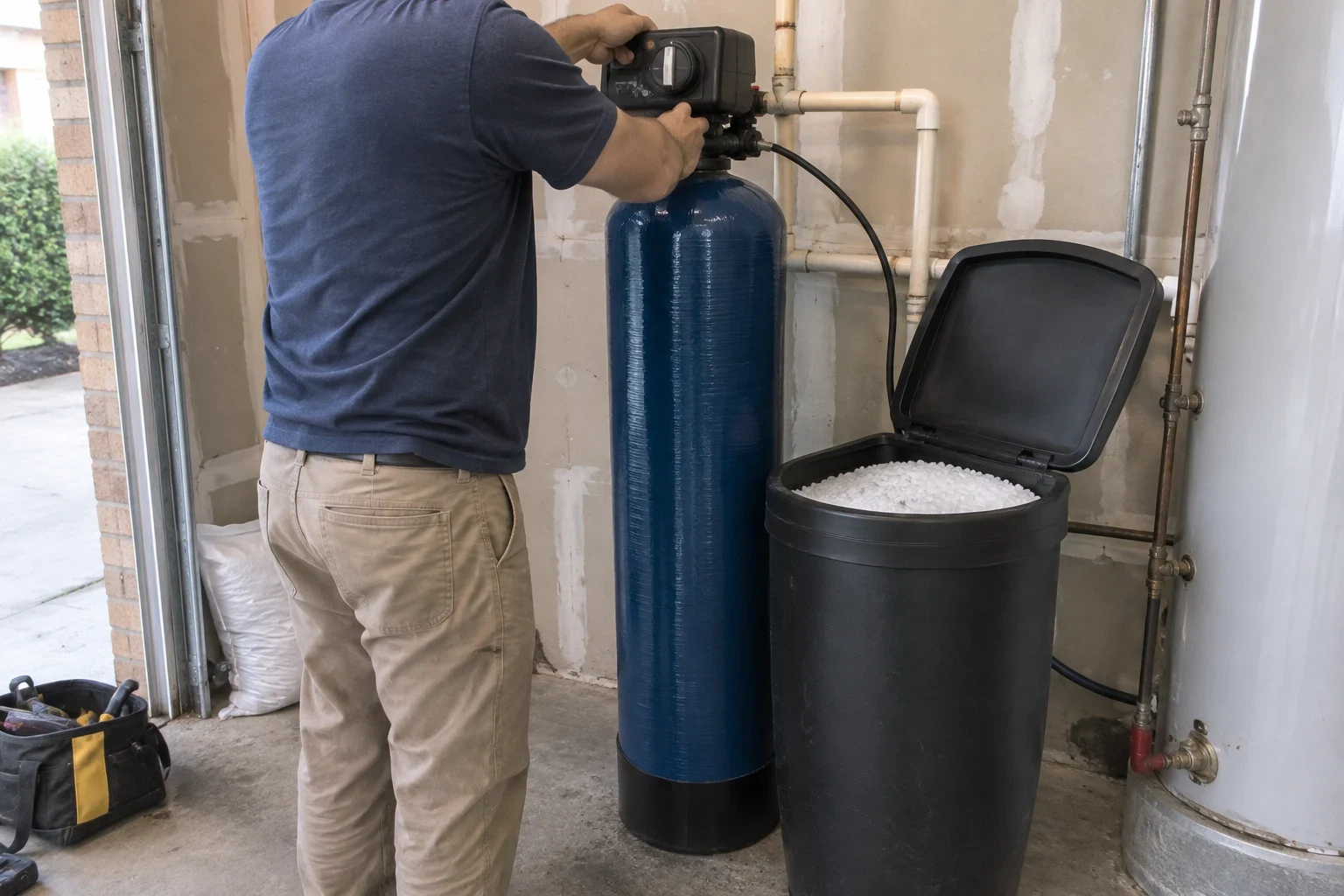
A softener that fits your water and your home
A water softener swaps the calcium and magnesium in your water for sodium or potassium as it passes through a bed of resin beads. When the resin fills up, the unit flushes it with brine from the salt tank and starts fresh. Done right, you get softer water at every tap, less scrubbing and appliances that are not fighting mineral buildup.
Done wrong, you get a tank that regenerates too often and burns through salt, or one so small it runs out of capacity by Sunday night. That is why we start with a hardness test and a few questions about your home: how many people live there, how many bathrooms, and where the main line comes in.
Plenty of homes around Briarcliff, Lakeway and Lago Vista are good candidates, but not every one. If a salt-free water conditioner or whole-home filtration would serve you better, we will say so plainly. We would rather you trust our advice than buy the wrong box.
What your installation includes
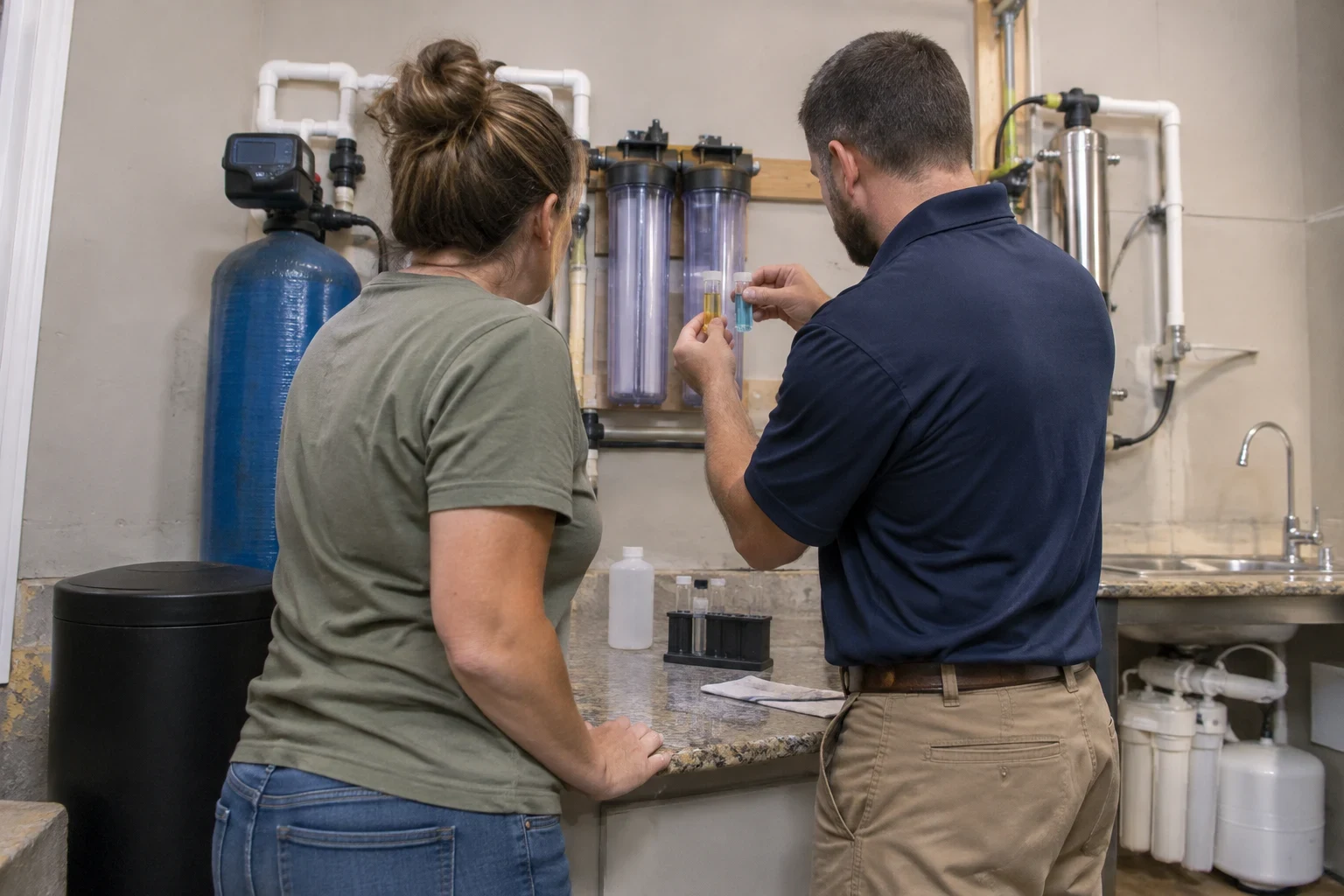
Hardness and iron test
We measure hardness in grains per gallon and check for iron, which can foul resin. Those two numbers drive the size and settings of your system.
Right-sized equipment
We match resin capacity to your water use so the unit regenerates on a sensible schedule. Metered, demand-based valves are our usual pick because they only use salt and water when needed.
Free installation
We offer free installation. That covers connecting the softener at your plumbing loop or main line, adding a bypass valve and running the drain line with a proper air gap.
Programming and setup
We set the hardness, regeneration time and salt level for your home before we leave, then fill the brine tank so the system is ready to go.
A plain walk-through
We show you the bypass, how to add salt and what a salt bridge looks like. You will know what to check and when.
How to tell hard water is causing trouble at home
- White crust on fixtures
- Chalky rings on faucets, showerheads and around drains are mineral scale. It returns within days of cleaning.
- Hazy glasses after every wash
- Clean glasses come out of the dishwasher with a dull haze or dried-on spots. Trying a new detergent rarely helps, because the minerals in your water are what is leaving the mark.
- Soap that will not lather
- Hard water works against soap and shampoo. You end up using more of both, and skin and hair may feel dry or tight.
- Crackling sounds from the water heater
- When a tank heater starts making banging or crackling noises, scale has often settled in a layer at the bottom. The heater then burns more energy to give you the same hot water.
- An old softener that is failing
- If your current unit eats salt, leaves the tank wet and mushy, or the water feels hard again, the resin or valve may be worn out. We can tell you whether a smaller fix or a replacement makes more sense.
What to expect, step by step
- 1
Start with a phone call
Let us know what you have noticed at the taps, and we will ask a few things about your home. Then we pick a visit time that suits your schedule.
- 2
Testing at your home
We test your water right there and look over where a softener would fit, often a garage loop or near the main line. You get a clear answer on whether a softener makes sense.
- 3
Your quote in writing
Equipment and any extra plumbing parts are listed line by line. If something needs to change later, we talk it through with you first.
- 4
Installation day
Drop cloths go down, the water is off for a short while, and we plumb in the softener with a bypass and set the drain line. Most jobs are finished in one visit, and we tidy up before heading out.
- 5
Checking in afterward
Once the first regeneration cycle has run, call us if anything looks or tastes off. A quick question early beats wondering for weeks.
What goes into the cost of your softener
With free installation, most of your quote is the equipment itself plus any plumbing your home needs to make room for it. We walk through every line with you before you say yes, and we will not steer you toward more capacity than your water needs.
- Your hardness reading and how many live there
- Each person adds to the daily load of minerals the resin has to pull out, and harder water raises that load further. A bigger household on harder water may need a larger resin tank, or two tanks working in turn.
- Metered or timer valve
- A metered valve regenerates based on the water you actually use. It costs a bit more up front than a timer model, but it tends to save salt and water year after year.
- What the plumbing looks like where it goes
- Some homes were built with a softener loop already in place, which keeps things simple. If yours was not, we may need a few more fittings to tie into the main line.
- Distance to a drain and an outlet
- Regeneration water has to go to a drain, and the valve needs power. When either one sits well away from the install spot, a few more parts go on the list.
- Optional extras
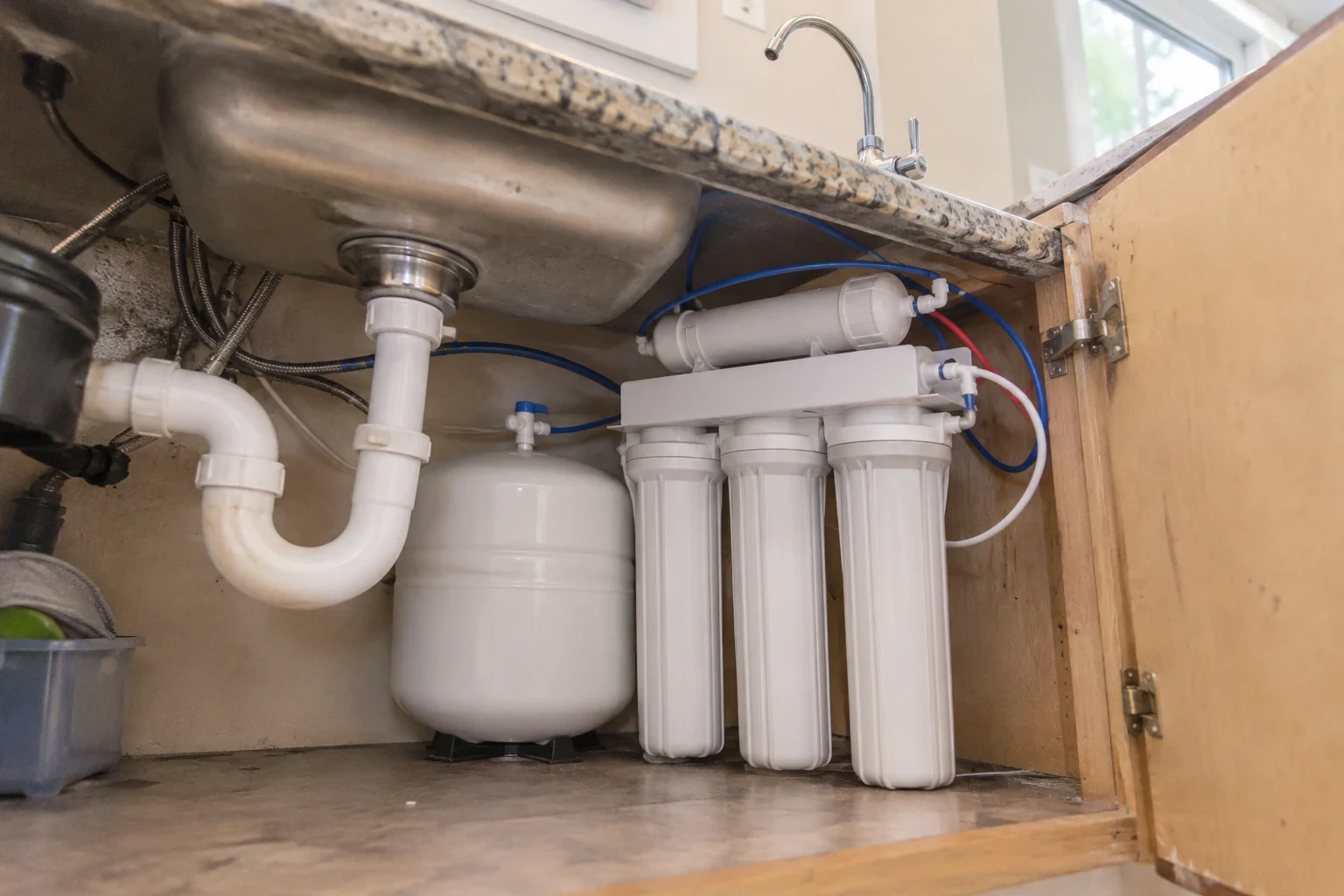
- A sediment pre-filter or a reverse osmosis system under the kitchen sink can help in some homes. You only hear about them from us if your test results point that way.
Answers to common softener questions
- Should I get a softener or a salt-free conditioner?
- That comes down to your hardness level and what is bugging you. A salt-free water conditioner cuts down on scale forming, but the minerals stay in the water, so some spotting remains. A softener actually takes them out. We test first and give you an honest answer on which suits your home.
- Will softened water taste salty?
- Most people can't pick it up at all. A softener adds a little sodium in exchange for the hardness it pulls out, and very hard water means a bit more of it. If you want to keep that sodium out of what you drink, a reverse osmosis system under the kitchen sink takes it back out. Another route is loading the salt tank with potassium chloride pellets in place of regular softener salt.
- What maintenance should I expect?
- Mainly topping up the salt, typically every month or two depending on your water and how much you use. Now and then, look for a hard crust or bridge in the salt tank and break it apart. We show you how before we leave on install day.
- Where will the softener be installed?
- Most often in the garage at the plumbing loop, or near the spot where the main water line comes into your home. It needs a drain and an outlet close by. We check your setup during the free water test.
- Will my outdoor spigots get softened water?
- Often they do not, and that is usually a good thing. Many homes have hose bibs plumbed ahead of the softener, so you are not spending softened water on the lawn. We look at how your lines run and tell you which taps will be softened.
Find out what your water actually needs
We will test your hardness, look at your plumbing and give you a straight recommendation. If a softener is the right fit, the installation is free.