ServicesIron and Sulfur Removal
Iron and Sulfur Removal in Briarcliff
Rust-colored rings in the toilet, laundry turning orange, a sulfur smell when you run the shower. We test your water to see how much iron and hydrogen sulfide is there, then install a filter sized for your home so the stains and the odor stop.
What iron and sulfur removal does for your home
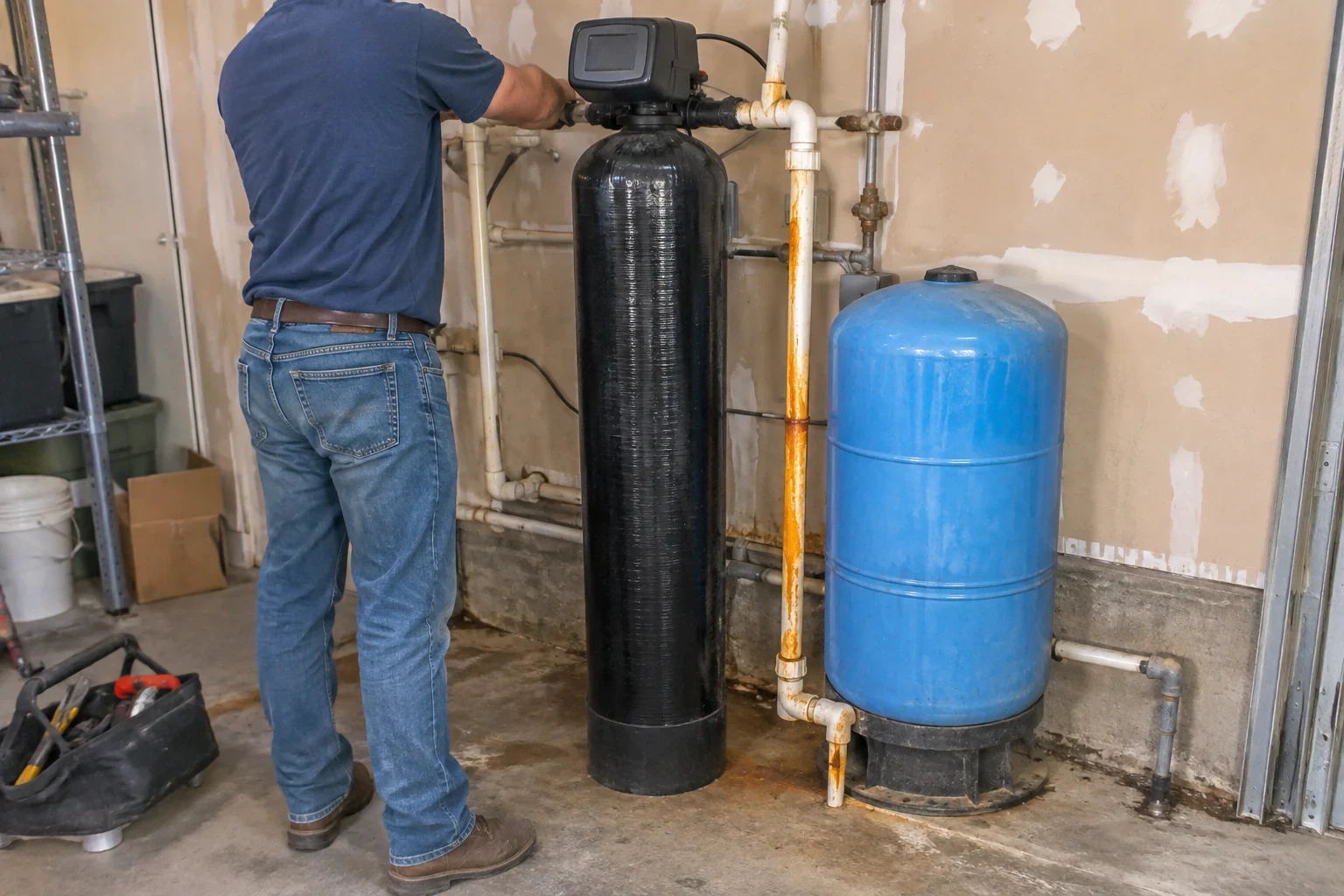
Iron and hydrogen sulfide are two of the most noticeable problems water can have, even at low levels. A fraction of a part per million of iron is enough to stain porcelain and fixtures. Hydrogen sulfide gives off that rotten-egg smell long before it reaches a level most people would call high.
Our systems work by oxidizing the iron and sulfur, turning dissolved minerals into solid particles, then trapping them in a filter bed that cleans itself on a regular backwash cycle. The result is clear water at every tap, white laundry that stays white, and showers that smell like nothing at all.
We treat every job the way we would want our own neighbor's done. That means testing before we recommend anything, telling you plainly if the smell is coming from your water heater instead of your supply, and leaving your utility area cleaner than we found it.
What the work includes
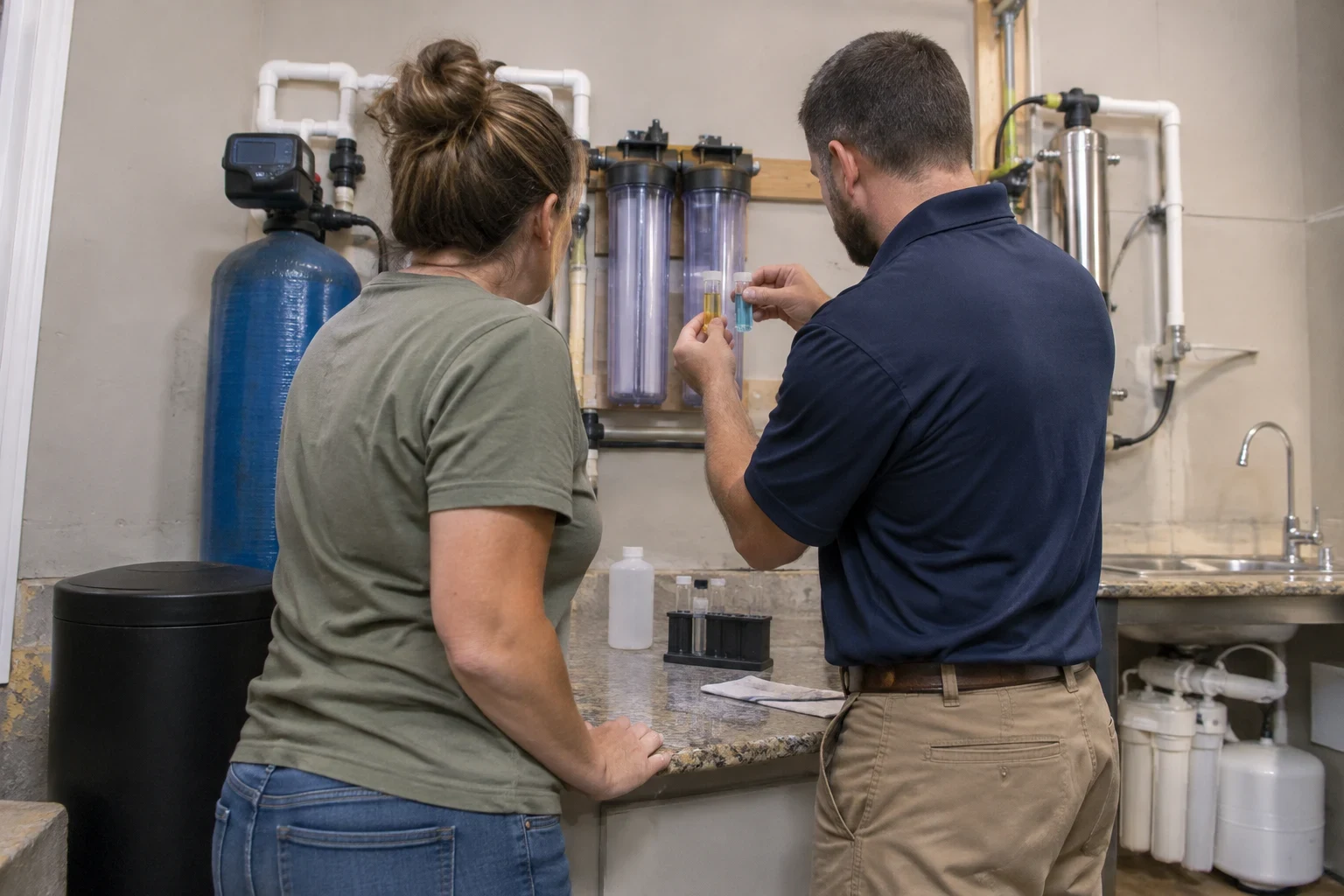
A water test first
We measure iron, hydrogen sulfide, manganese, pH and hardness. Those numbers decide which filter will actually work, so we do not guess.
Finding where the smell starts
If the rotten-egg odor only shows up on the hot side, the cause is often the water heater's anode rod reacting with sulfates, not the water coming into your home. We check that before suggesting a filter.
The right oxidizing filter
For moderate levels we usually fit an air-injection or catalytic media filter. Heavier iron or sulfur may call for a small chemical feed ahead of the filter. We explain why we chose one over the other.
Installation at your main line
We plumb the system where water enters your home, add a bypass valve so you can isolate it, and run the backwash line to a proper drain.
Programming and a walkthrough
We set the backwash schedule to your water and household size, then show you what the system does each night and what to watch for.
Signs your water has iron or sulfur
- Orange or brown stains
- Rust-colored rings in toilets, streaks under faucets, and stained shower grout are classic iron signs. They come back quickly after scrubbing.
- A rotten-egg smell
- Hydrogen sulfide is easy to notice at the tap, especially first thing in the morning or after the water has sat.
- Laundry that yellows
- Whites turning dingy or orange after a few washes usually points to dissolved iron in the rinse water.
- Black specks or slime
- Dark grit can mean manganese, while reddish slime in the toilet tank often means iron bacteria. Both tell us what kind of treatment you need.
- Metallic taste in coffee or tea
- Iron changes the taste of hot drinks and can darken them. Many people notice it in their coffee before they see any stains.
How a job goes from first call to clear water
- 1
Your call and a free test
We talk through what you are seeing and smelling, then test your water at your home. You get the results explained in plain language.
- 2
A written recommendation
We put the system, the reason for it, and the full cost on paper. If a simpler fix like an anode rod swap would solve it, we say so.
- 3
Installation day
We lay down drop cloths, shut off the water briefly, and install the system at the main line. Most homes are back to running water the same afternoon.
- 4
Testing the result
Once the filter has run its first cycle, we retest to confirm the iron and sulfur are coming out, and we clean up before we leave.
What moves the cost
Every iron and sulfur system is sized to the water it treats, so we price after testing rather than before. Installation itself is free, and the quote you get covers the equipment and any extra parts your home needs.
- How much iron and sulfur
- Low levels can be handled by a single oxidizing filter. Higher concentrations may need chemical feed or a larger media tank.
- Your household's water use
- More bathrooms and more people mean higher flow, which calls for a larger tank so pressure does not drop.
- Other things in the water
- Manganese, iron bacteria, or low pH can each add a step, such as a neutralizer or pre-treatment.
- Plumbing and drain access
- The system needs a drain for backwashing and room at the main line. Tight spaces or a long drain run add some work.
Iron and sulfur questions we hear often
- Can a water softener remove iron?
- Only in small amounts. Dissolved iron slowly coats softener resin and wears it out, and a softener has no effect on the rotten-egg smell from sulfur. If your water is also hard, we often pair an iron filter with water softener installation so each system handles its own job.
- Why does only my hot water smell like rotten eggs?
- That usually points to the water heater. The magnesium anode rod can react with sulfates and bacteria to make hydrogen sulfide inside the tank. We will check this first, because swapping the anode may be all you need.
- Is iron or sulfur in my water a health risk?
- At the levels found in most homes, iron and hydrogen sulfide are mainly nuisance problems: stains, odor and taste. Our water testing and analysis will show exactly what is present, so you can decide with real numbers instead of worry.
- How much upkeep does an iron filter need?
- Air-injection and catalytic systems backwash on their own, usually overnight. Media generally lasts several years, and chemical feed systems need a solution refill now and then. We show you how before we leave.
- Will the system lower my water pressure?
- Not when it is sized right. That is why we match the tank to your home's flow rate and number of bathrooms instead of fitting one size for everyone.
Ready to get rid of the stains and the smell
Tell us what you are noticing and we will start with a free water test. You get honest numbers, a clear recommendation and installation at no charge.