ServicesReverse Osmosis Systems
Reverse Osmosis Systems in Briarcliff
Skip the cases of bottled water and the chlorine bite in your morning coffee. An under-sink reverse osmosis system gives your kitchen its own faucet of clean, crisp drinking water. We check your water first and suggest only what your home actually needs.
What a Reverse Osmosis System Does for Your Kitchen
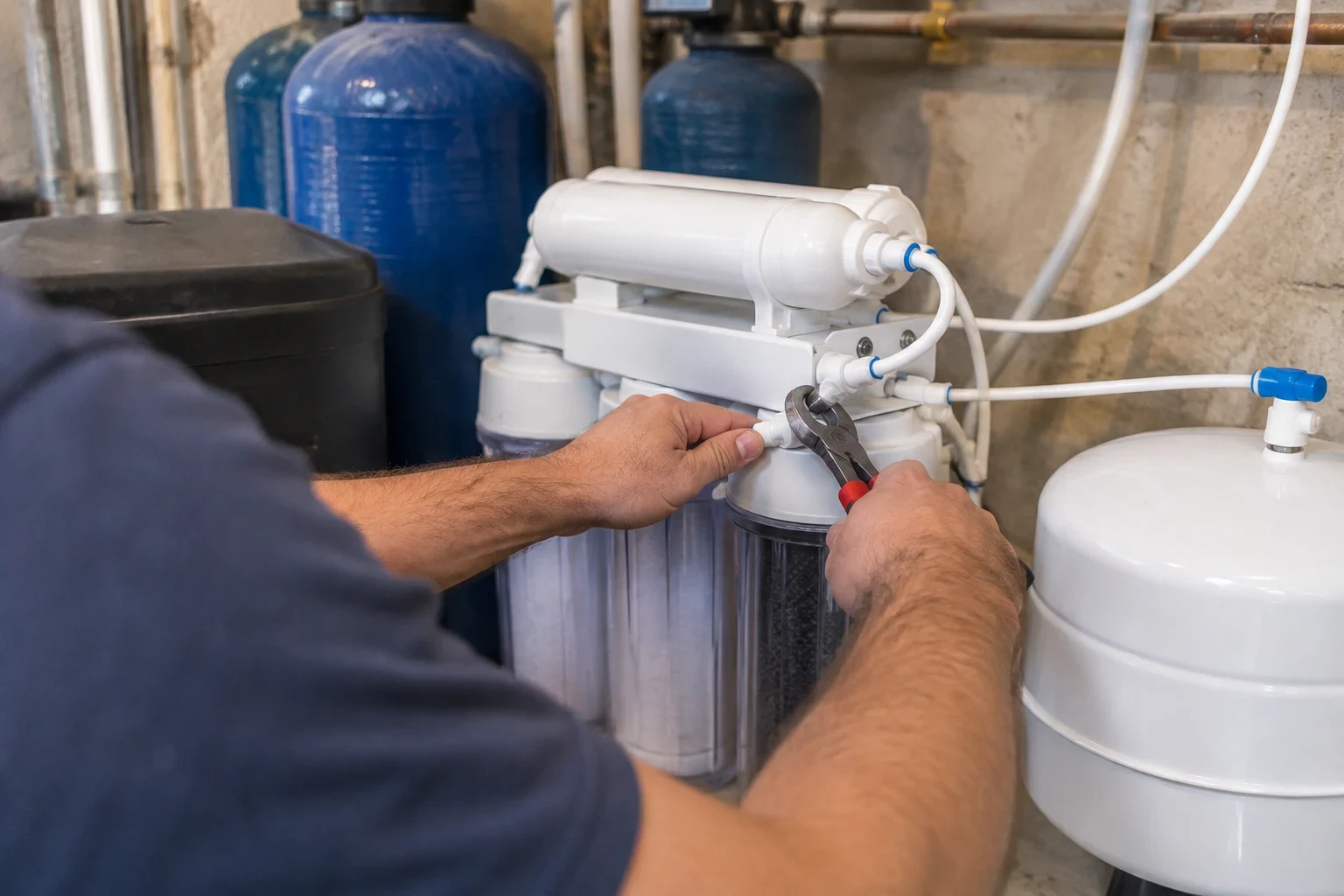
Reverse osmosis pushes your water through a membrane with pores so fine that most dissolved solids can't follow. Lead from older plumbing, nitrates, fluoride and the minerals that leave white crust on your kettle get rinsed down the drain. Carbon filters before and after the membrane take out chlorine taste and odor, so what reaches your glass tastes clean.
It works at one sink, usually the kitchen, because that is where you drink and cook. If you want better water at every tap and shower, whole-home filtration is the better fit, and many families pair the two. We'll tell you plainly which one solves your problem, and if your test shows you don't need RO, we'll say so.
What Your Installation Includes
- 01
Multi-stage filter system
First a sediment filter traps grit, then a carbon filter pulls out chlorine before it can harm the membrane. The RO membrane does the heavy lifting, and a last carbon stage polishes the taste.
- 02
Dedicated drinking water faucet
Your filtered water gets its own faucet beside the main one. On granite or quartz, we use a stone-rated bit and work slowly so the edge of the hole stays clean and chip-free.
- 03
Storage tank and drain connection
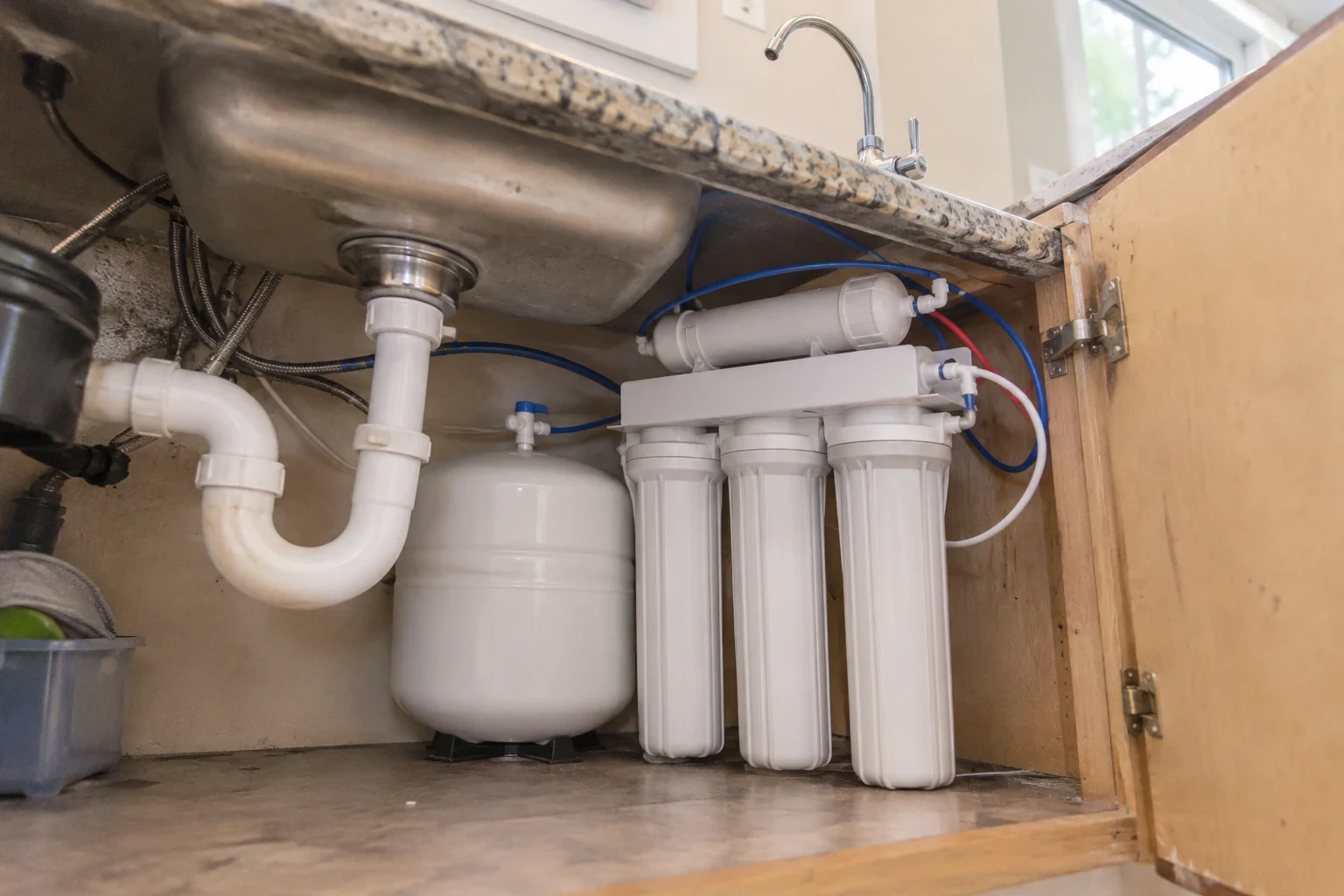
A small pressurized tank tucks into the cabinet and keeps a supply ready, so filling a pot doesn't mean waiting. The rinse line ties into your sink drain so wastewater has a proper path out.
- 04
Optional fridge and ice maker line
Want filtered ice and dispenser water too? We can connect a line from the system to your refrigerator. Clearer ice cubes tend to be the first difference people notice.
- 05
A walkthrough before we leave
Before we pack up, we point out each filter, show you how a change is done and give you a rough timeline. Small questions get answered on the spot instead of later.
Questions about Reverse Osmosis Systems?
Call(512) 883-1130Signs an RO System Makes Sense for Your Home
You buy bottled water every week
Those weekly cases cost money, take up the trunk and pile up in the recycling bin. A filtered faucet at your sink gives you comparable water whenever you want it.
Tap water tastes or smells of chlorine
The utility adds chlorine to keep water safe in the pipes, but it doesn't belong in your tea. Carbon stages inside an RO system remove that taste and smell.
Your home has older plumbing
Aging pipes and old solder can pick up lead between the street and your faucet, even when the utility's supply is clean. Reverse osmosis ranks among the most effective ways to cut lead in drinking water.
Spots, scale and cloudy ice
Chalky film on glasses and buildup inside the coffee maker come from dissolved minerals. With RO water, dishes rinse clearer and small appliances stay cleaner.
A water test showed high dissolved solids
If your water testing and analysis report comes back with high total dissolved solids, that is the exact problem reverse osmosis was built to handle.
How the Work Goes, Start to Finish
- 1
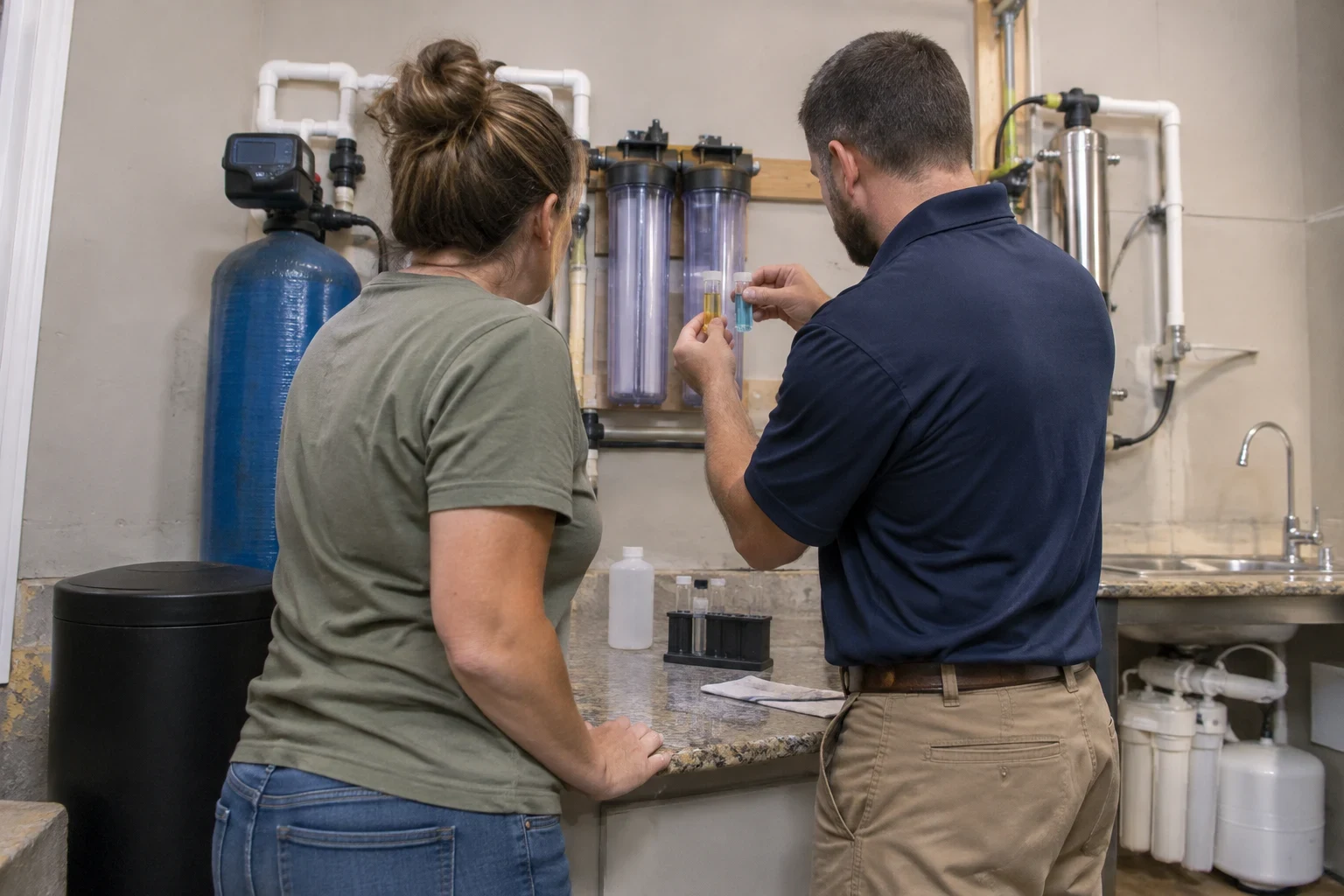
Free water test and a quick chat
We test what's coming out of your tap and listen to what you don't like about it. Those two things tell us if RO fits or if a different option would help you more.
- 2
A clear recommendation and quote
You hear which system we'd pick, the reason for it, and what filter upkeep will run each year. We won't push extra equipment your results don't support.
- 3
Install day
Expect the job to wrap up in a few hours at most. We empty the cabinet with care, put down a protective mat and test your pressure, then mount the filters and tank and set the new faucet.
- 4
Flush, check and tidy up
The fresh filters get flushed and every connection gets checked for leaks. Your things go back under the sink where they were, and we hand you the first glass along with your filter schedule.
What Sets the Price of an RO Setup
Installation costs you nothing, so your price comes down to the equipment you choose and any add-ons your kitchen calls for. On the phone or after your water test, we walk through each piece with you, plus what replacement filters run per year. That way the number you hear first is one you can plan around.
- Tank or tankless
- Our 5-stage tank reverse osmosis system (sediment, GAC, carbon block, RO membrane and post carbon, with an under-sink storage tank) is the more affordable choice. Our tankless reverse osmosis system (800 gallons per day, 7 stages) saves cabinet space and refills fast, but carries a higher purchase price.
- Optional mineral stage
- A last cartridge can return a little calcium and magnesium to the water, which some people prefer for a fuller taste. Plenty of others skip it, and either way is fine.
- Water pressure at your sink
- An RO membrane works best with consistent pressure behind it. If your line pressure is low, the setup may need a booster or permeate pump.
- Refrigerator line and faucet style
- A line to your refrigerator means extra fittings and a bit more work. The faucet comes in a range of finishes, so it can sit alongside the fixtures you already have.
Reverse Osmosis Questions We Hear Often
Does a reverse osmosis system waste water?
A portion of the water flushes the membrane and goes to the drain, which is what keeps it from clogging. Newer systems send far less to the drain than older designs did, and adding a permeate pump reduces it more. Before you decide, we'll show you how efficient the system we're suggesting is.
Will the water taste flat without minerals?
Taste is personal here. Plenty of people find RO water clean and crisp, while a few notice it tastes a bit thin. If that's you, an optional mineral cartridge brings back a hint of calcium and magnesium.
How often do the filters need changing?
Most homes replace the sediment and carbon cartridges once or twice a year, depending on the water and how much of it your family drinks. The membrane lasts longer, usually a few years. We write down a simple change schedule for you so nothing sneaks up on you.
Will it fit under my sink?
Most kitchen cabinets have room. The filter housings hang on the side or back wall, and the tank sits next to them. When a garbage disposal or deep basin eats up the space, a tankless model usually solves it.
Do I still need whole-home filtration?
That depends on what bothers you. An RO system handles drinking and cooking water at a single faucet. If chlorine in the shower or laundry is also on your list, whole-home filtration treats every other tap, and we'll help you weigh whether doing both makes sense.
Ready for Better Water at Your Kitchen Sink?
We'll test your water for free, talk through what we find, and give you a straight quote. Installation is free when you go ahead.